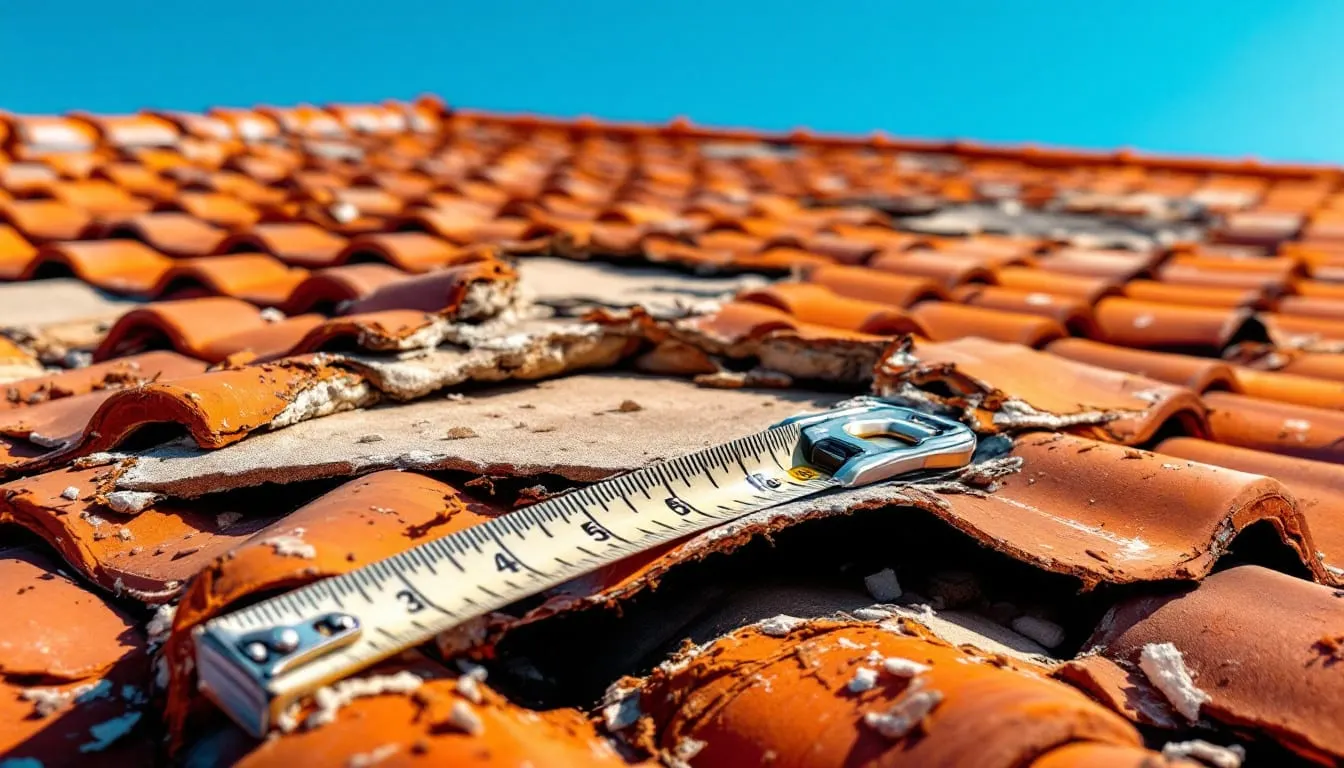
Phoenix Roof Insurance Claim Process: Real 2026 Guide for State Farm, Allstate, Farmers, and the Arizona Adjuster Playbook
Phoenix roof insurance claims hinge on three things — Arizona policy language, contractor documentation, and adjuster meeting preparation. Real 2026 process guide, what to expect from State Farm, Allstate, and Farmers, and the storm-chaser pitfalls that get claims denied.
TL;DR for Phoenix Homeowners Filing a Roof Claim
If your Phoenix roof has monsoon, hail, or storm damage and you are filing an insurance claim, three things determine whether the claim pays out at the level you expect: the specific language in your Arizona policy about wind, hail, and water damage coverage; the quality of your contractor documentation before the adjuster arrives; and your preparation for the adjuster meeting itself. Per the National Association of Insurance Commissioners published consumer guidance on storm damage claims, the homeowner who walks into the adjuster meeting with HAAG-certified inspector documentation, dated photos, and a written contractor estimate recovers materially more than the homeowner who walks in unprepared. State Farm, Allstate, and Farmers each have slightly different claim workflows in Arizona, but the underlying process is consistent.
This guide walks through the real Phoenix roof claim sequence, what to expect from each of the major carriers active in the Arizona market, the adjuster meeting playbook, and the storm-chaser pitfalls that routinely get claims denied or under-paid.
The 7-Step Phoenix Roof Insurance Claim Sequence
Here is the actual workflow a competent roof claim follows from storm event to paid settlement:
Step 1: Document the Storm Event
Pull the NWS Phoenix storm event report for the date of the suspected damage. The National Weather Service Phoenix office maintains an archive of every recorded storm event with wind speeds, hail size, and rainfall data. Print or save this — the report proves the event happened on the date you claim.
Step 2: Document Visible Damage
Photograph everything you can see from the ground. Date the photos. Include:
- Wide shots of the entire roof from each side of the house
- Close-ups of any visible tile, shingle, or membrane damage
- Photos of debris (broken tiles in yard, branches on roof, etc.)
- Photos of any interior staining, attic moisture, or leak symptoms
Step 3: Get a Professional Roof Inspection
Call an Arizona ROC-licensed local roofer with an HAAG-certified inspector. Per the HAAG Education Inspection Certification program, HAAG inspectors hold credentials that insurance carriers recognize — their reports carry significant weight in claim disputes. The inspection report should include:
- Detailed photos of all damage
- Identification of damage cause (wind, hail, mechanical, age)
- Repair scope description
- Itemized estimate with line-item pricing
Step 4: File the Claim
Contact your insurance carrier through their published claim phone number (NOT through any contractor's "claims assistance" service — that is a red flag). State Farm, Allstate, and Farmers all maintain dedicated claim phone lines plus app-based filing. Provide:
- Date of suspected damage
- Brief description of the event
- Confirmation that you have a contractor inspection report ready
Step 5: Adjuster Meeting
The carrier dispatches a field adjuster (sometimes called a desk adjuster for smaller claims) who meets you at the property. The meeting typically lasts 30-90 minutes and includes a walk-around plus a roof inspection if accessible. Have ready:
- Your contractor's HAAG inspection report
- Dated photos
- NWS storm event report
- Itemized contractor estimate
Step 6: Carrier Decision
The carrier provides a written claim decision typically within 14-30 days of the adjuster meeting. The decision usually includes:
- Whether the claim is approved, denied, or partially approved
- The settlement amount minus your deductible
- The basis for any disputed items
Step 7: Settlement and Repair
If approved, the carrier issues payment (sometimes in two installments — initial payment and post-completion payment). You authorize the contractor to perform the work. The contractor completes the work and submits proof to the carrier for any held-back final payment.
Per the Arizona Department of Insurance and Financial Institutions consumer guidance, the carrier is required to acknowledge claim filing within 10 days, complete investigation within 30 days, and provide a written claim decision within 30 days of completing investigation. Delays beyond these windows are reportable to the Department.
What to Expect From Each Major Phoenix Carrier
The three highest-volume residential carriers in the Phoenix market are State Farm, Allstate, and Farmers, with American Family, USAA, Nationwide, and Liberty Mutual also active. Each has slightly different claim characteristics:
State Farm
The largest carrier by market share in Arizona. Typically uses internal field adjusters for residential roof claims. Process tends to be straightforward when documentation is solid. Higher likelihood of requiring an in-person adjuster meeting (vs. desk adjusting). Settlement timeline: typically 30-45 days from claim filing to first payment.
Allstate
Frequently uses third-party adjuster networks (independent adjusters contracted to Allstate). Process can be slower than State Farm because of the third-party handoff. More variance in adjuster experience and damage assessment. Settlement timeline: typically 35-60 days. Push back hard on under-estimation if the third-party adjuster's number is materially below your contractor's estimate — Allstate has a published re-inspection process.
Farmers
Similar process to State Farm with internal field adjusters predominantly. Reputation in Phoenix for relatively responsive claim handling on solid documentation. Settlement timeline: typically 30-50 days.
Other Carriers (USAA, American Family, Liberty Mutual, Nationwide)
USAA is highly regarded for member service quality. American Family uses a mix of internal and third-party adjusters. Liberty Mutual and Nationwide have more variable Phoenix claim experiences. Across all carriers, the determining factor is your documentation quality, not the carrier brand.
The Adjuster Meeting Playbook
The adjuster meeting is the single highest-leverage moment in the entire claim. Here is what works:
Before the meeting:
- Have your contractor's HAAG inspection report printed in physical form
- Have dated photos printed or on a tablet ready to show
- Have the NWS storm event report printed
- Have the contractor's itemized estimate printed
- Optionally: invite your contractor to attend the adjuster meeting (most reputable Phoenix roofers will attend at no charge; their presence often shifts the meeting outcome)
During the meeting:
- Walk the adjuster through the damage area by area
- Reference the storm event date and what specifically occurred
- Show the photos taken immediately after the event
- Present the HAAG inspection report
- Let the adjuster make their own assessment but provide your documentation as supporting evidence
After the meeting:
- Ask the adjuster for a verbal estimate range before they leave
- Request a copy of the adjuster's report when the written decision arrives
- Document any verbal commitments the adjuster makes (settlement timeline, items being approved or disputed)
Per the National Association of Insurance Commissioners guidance, the homeowner who treats the adjuster meeting as a fact-presentation opportunity (here is the evidence) rather than an adversarial negotiation tends to recover more.
The Storm-Chaser Pitfalls That Get Claims Denied
After every major Phoenix monsoon or hailstorm, storm-chaser contractors flood the market. They typically run one of three patterns that get insurance claims denied:
Pitfall 1: "Free inspection — we'll handle the insurance for you."
Storm-chasers often offer to "handle the claim" with no upfront cost to the homeowner. They then submit inflated estimates with fabricated damage descriptions. When the adjuster investigates and disputes the damage, the claim is denied — often along with future claims on the same property because the carrier flags the address for suspected fraud.
Pitfall 2: "Sign this contract — it's contingent on insurance approval."
These contracts typically include clauses that bind the homeowner to use the storm-chaser regardless of whether the insurance amount is sufficient. If insurance pays less than the storm-chaser quoted, the homeowner is on the hook for the difference. Per the Arizona ROC's published consumer protection guidance, refuse any contract signed before the insurance settlement is finalized.
Pitfall 3: "We just need a roof access agreement — it's a formality."
Some storm-chasers obtain roof access agreements that they then use to perform unauthorized "exploratory" work on the roof, creating damage they then bill for. Always confirm the contractor is Arizona ROC licensed before allowing roof access.
The reliable defense: use only Arizona ROC-licensed local contractors for inspections and repair work. Verify the license at the Arizona ROC public search before authorizing any work.
What Experts Say
"The single most predictive factor in a Phoenix roof insurance claim outcome is whether the homeowner has an HAAG-certified inspection report before the adjuster arrives. The adjuster's job is to assess damage; having professional documentation in hand shifts the conversation from 'what happened?' to 'here's the documented damage and the repair scope.' The storm-chasers know this — that's why they aggressively recruit homeowners after every storm. The honest contractor's job is the same: document accurately, advise on the claim process, and let the homeowner own the relationship with the carrier." — Phoenix-area master roofer, HAAG-certified inspector, NRCA member, 20 years experience, anonymized
Per the National Roofing Contractors Association (NRCA) published storm response best practices, the recommended workflow for any post-storm Phoenix roof claim is exactly the 7-step sequence described above. Skipping any step (particularly Step 3, the professional inspection) is the most common reason claims are denied or under-paid.
Real Phoenix Claim Outcome Scenarios
Scenario A — Mesa tile roof, July microburst, State Farm: Homeowner pulled NWS event report, documented visible damage, hired HAAG-certified local roofer for inspection. Adjuster meeting with contractor present. Settlement: $4,200 minus $1,000 deductible = $3,200 paid out. Repair completed within 60 days of storm event.
Scenario B — Scottsdale shingle roof, August haboob aftermath, Allstate: Homeowner discovered ceiling staining 4 months after the haboob. Contractor identified clogged scupper as root cause. Allstate disputed coverage initially (claimed maintenance issue). Homeowner provided contractor documentation showing the haboob was the proximate cause. Settlement: $1,650 paid out after re-inspection.
Scenario C — Phoenix flat roof, monsoon wind-driven rain, Farmers: Homeowner had attic moisture but no visible exterior damage. HAAG inspector identified failed parapet flashing as cause. Farmers approved partial claim ($2,100 of $2,850 estimate) citing maintenance contribution. Homeowner accepted settlement and used additional out-of-pocket for full repair.
Scenario D — Chandler storm-chaser scam attempt, claim denied: Homeowner signed contingency contract with door-knocking contractor. Contractor submitted $18,500 claim with photos that did not match the property. Insurance investigator visited the property, determined the photos were fabricated, denied the claim, and reported the contractor to Arizona ROC. Homeowner avoided liability by canceling the contract within the 3-day Arizona right-to-rescind window.
Frequently Asked Questions
Q: How long do I have to file a roof insurance claim in Arizona? A: Most Arizona homeowner's policies require claim filing within 365 days of the storm event. Some policies have shorter windows. Read your policy declarations page or call your agent to confirm the specific window for your carrier and policy.
Q: Will my insurance rates go up if I file a roof claim? A: Possibly. Per the Arizona Department of Insurance and Financial Institutions, carriers may raise rates after weather-related claims, but Arizona law limits some rate-increase actions. A single legitimate storm-related claim typically does not trigger non-renewal, but multiple claims within a short window might.
Q: Should I let my contractor be present at the adjuster meeting? A: Yes — almost always. A reputable Phoenix roofer attending the adjuster meeting at no charge can identify damage the adjuster missed, explain the technical repair scope, and document any verbal commitments. Storm-chaser contractors who insist on attending and "negotiating with the adjuster" are a different category — avoid these.
Q: What if the adjuster's number is materially lower than my contractor's estimate? A: Request a re-inspection through the carrier's published dispute process. Most carriers (State Farm, Allstate, Farmers) have formal re-inspection processes. Submit additional documentation, request a senior adjuster, or escalate through your independent insurance agent if you have one. Per Arizona DIFI guidance, persistent disputes can be escalated to the state regulator if the carrier is acting in bad faith.
What to Do Right Now
If you have Phoenix roof storm damage and need to file an insurance claim:
- Pull and save the NWS Phoenix storm event report for the damage date.
- Photograph all visible damage from the ground. Date the photos.
- Call an Arizona ROC-licensed local roofer with HAAG-certified inspector for a formal inspection. Get written report and itemized estimate.
- File the claim through your carrier's published phone or app. Provide event date and confirm you have inspection documentation ready.
- Prepare for the adjuster meeting: print documentation, optionally invite your contractor, walk the adjuster through the damage with evidence in hand.
- Refuse any door-knocking contractor offering to "handle the claim" — these almost always create more problems than they solve.
A properly documented Phoenix roof claim recovers most of the legitimate repair cost. A poorly documented claim leaves money on the table or gets denied entirely.
Sources
- National Association of Insurance Commissioners
- Arizona Department of Insurance and Financial Institutions
- Arizona Registrar of Contractors
- National Weather Service Phoenix Office
- HAAG Education Inspection Certification
- National Roofing Contractors Association (NRCA)
- International Code Council — IRC Roofing
Free roof inspection
Have a leak, monsoon damage, or a quote you want a second look at?
Licensed residential roofing across Phoenix and the Valley. Honest scopes, plain-language explanations, and no pressure.