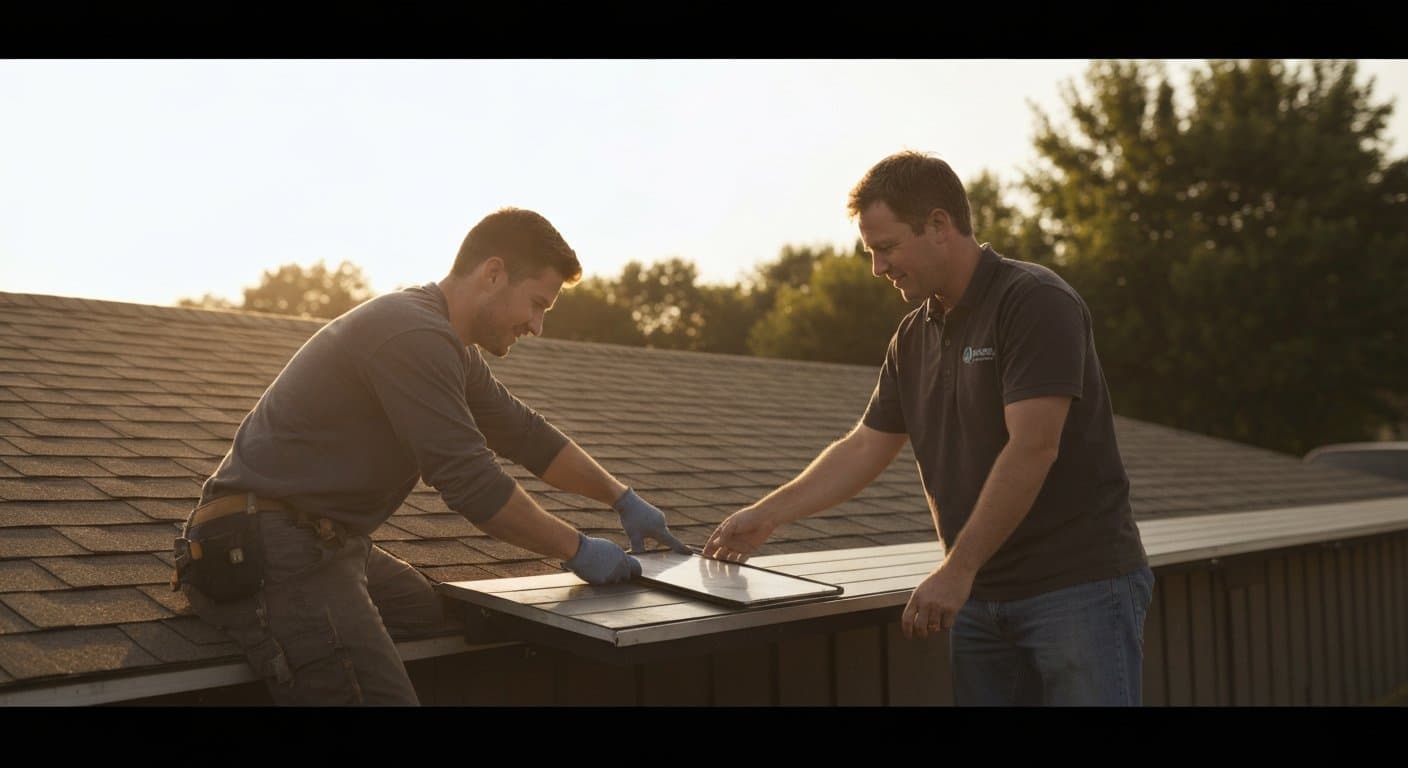
Ridge Vent Installation Phoenix: Expert Attic Ventilation
Ensure your home stays cool with expert ridge vent installation in Phoenix. Contact Roofrepairsphoenixaz today for optimal attic ventilation solutions!
When Arizona heat radiates through your roof and your attic turns into an oven, proper ventilation becomes critical. Roofrepairsphoenixaz installs ridge vents throughout Phoenix, helping homeowners reduce cooling costs and extend roof life. Call or text (602) 878-1896 to schedule an assessment and receive a written estimate for ridge vent installation tailored to your home.
Ridge vents run along the peak of your roof, allowing hot air to escape continuously while drawing cooler air through soffit vents below. In Phoenix, where summer attic temperatures regularly exceed 150 degrees, a well-designed ridge vent system protects shingles, reduces strain on air conditioning, and prevents moisture damage during monsoon season. Our team serves Phoenix and surrounding areas including Scottsdale, Tempe, Mesa, Glendale, and Peoria with professional ridge vent installation on tile, shingle, and flat roofs.
Quick Answer: What Is Ridge Vent Installation and Why Does Phoenix Need It?
Ridge vent installation involves cutting a continuous slot along the roof's peak and installing a low-profile vent that blends with your roofing material. Phoenix homes need ridge vents because extreme heat buildup in attics degrades roofing materials, forces air conditioning systems to work harder, and creates conditions for mold growth when monsoon moisture gets trapped.
A properly installed ridge vent system works with intake vents at the eaves to create continuous airflow. Hot air rises naturally and exits through the ridge while cooler outside air enters through soffit or gable vents. This passive ventilation requires no electricity and operates whenever temperature differentials exist between your attic and the outside air.
The National Roofing Contractors Association recommends balanced ventilation systems with both intake and exhaust components. Ridge vents provide the most effective exhaust solution because they span the entire roof length, eliminating hot spots that form with box vents or turbines spaced at intervals.
How Ridge Vents Protect Phoenix Roofs
Ridge vents extend roof life by reducing thermal stress on shingles and underlayment. When attic temperatures soar above 140 degrees during summer months, asphalt shingles on the roof deck's underside bake from below while the sun heats them from above. This double heating accelerates granule loss and shingle deterioration.
Tile roofs benefit equally from ridge vents. Clay and concrete tiles themselves withstand heat, but the underlayment and battens beneath them degrade faster in superheated attics. Ridge vents lower attic temperatures by 20 to 40 degrees, preserving these critical components.
During monsoon season, ridge vents prevent moisture accumulation. When rain-cooled air meets superheated attic spaces, condensation forms on roof decking and framing. Continuous ventilation through ridge vents keeps air moving and prevents the humidity levels that lead to wood rot and mold.
What Affects the Cost of Ridge Vent Installation
Ridge vent installation costs vary based on multiple factors unique to each Phoenix home. The table below outlines the main variables that determine your project price.
| Cost Factor | How It Affects Price | |-------------|---------------------| | Roof Size and Pitch | Larger roofs require more linear feet of vent; steep pitches increase labor time and safety equipment needs | | Roofing Material | Tile requires more precise cutting and reinstallation; shingle roofs typically cost less; foam or flat roofs may need custom solutions | | Existing Ventilation | Homes without soffit vents need intake ventilation added; removing old box vents or turbines adds labor | | Accessibility | Two-story homes, tile roofs, or complex roof lines with multiple peaks increase installation time | | Permits and Compliance | Modifications to roof structure may require permits in some Phoenix jurisdictions | | Season and Scheduling | Demand peaks during moderate weather; flexibility on timing may reduce costs |
Every roof presents unique conditions. The only way to receive accurate pricing is through an on-site assessment. Call or text (602) 878-1896 to schedule an inspection and receive a detailed written estimate with no obligation.
Arizona requires roofing work to be performed by a contractor licensed through the Arizona Registrar of Contractors. Before hiring any roofing contractor, ask for their ROC license number and proof of insurance, then verify the license status at https://roc.az.gov.
Roofing Services We Provide
Roofrepairsphoenixaz delivers comprehensive roofing services throughout the Phoenix metro area. Our team handles residential and commercial projects, from minor repairs to complete roof replacements.
Ventilation and Energy Efficiency
- Ridge vent installation on tile, shingle, and flat roofs
- Soffit and gable vent installation to complete ventilation systems
- Attic ventilation assessments and airflow calculations
- Roof inspection Phoenix services to evaluate current ventilation
Roof Repairs
- Tile roof repair Phoenix services for cracked, broken, or displaced tiles
- Shingle repair including wind damage and granule loss
- Flat roof leak detection and patching
- Storm damage roof repair Phoenix after monsoons and haboobs
Roof Replacement
- Shingle roof replacement Phoenix for aged or damaged asphalt roofs
- Tile roof installation and replacement
- Foam roof systems for flat or low-slope applications
- Gutter installation Phoenix to protect your new roof investment
Each service begins with a thorough inspection and written estimate. We explain your options clearly and work within your budget and timeline.
Ridge Vents vs. Other Attic Ventilation Options
Phoenix homeowners have several ventilation options, but ridge vents offer distinct advantages over alternatives.
Box Vents and Mushroom Vents
Box vents are static vents installed in holes cut through the roof deck, typically spaced every eight to ten feet along the upper roof sections. While functional, they create an inconsistent ventilation pattern. Hot air pools between vents, and their limited surface area restricts airflow compared to continuous ridge vents.
Ridge vents provide four to six times more net free ventilation area than an equivalent number of box vents. Because they span the entire ridge, they eliminate dead zones and provide uniform exhaust across the roof's length.
Turbine Vents
Turbine vents use wind to spin internal vanes that draw air from the attic. In Phoenix, where afternoon wind speeds drop to near zero during peak heat, turbines often stop spinning precisely when ventilation matters most. Bearings fail over time, causing squeaking and reducing effectiveness.
Ridge vents require no moving parts, operate silently, and function continuously regardless of wind conditions. The convective airflow driven by temperature differentials between attic and outside air provides reliable performance year-round.
Gable Vents Alone
Gable vents at opposite ends of an attic create cross-ventilation but only move air through the middle portion of the attic space. The upper triangular sections near the roof peak remain stagnant, trapping the hottest air where heat transfer to living spaces occurs most directly.
Combining gable vents as intake with ridge vents as exhaust creates superior airflow. The ridge vent draws air from intake vents throughout the attic perimeter, ensuring complete air exchange rather than a single cross-flow path.
Powered Attic Fans
Electric attic fans force air out mechanically but consume electricity, require maintenance, and can create negative pressure that pulls conditioned air from living spaces through ceiling penetrations. Research from ENERGY STAR shows that improperly implemented powered ventilation can increase cooling costs rather than reduce them.
Ridge vents provide passive ventilation without ongoing energy costs or mechanical failures. The initial installation investment pays dividends through decades of maintenance-free operation.
Repair vs. Replacement: How to Tell When You Need a New Ridge Vent
Existing ridge vents occasionally require repair or replacement. Knowing when to upgrade your ventilation system saves money and prevents roof damage.
Signs Your Ridge Vent Needs Attention
- Visible gaps or separation where the ridge vent meets roofing material
- Cracked or broken vent sections allowing rain penetration
- Missing end caps or closures that let pests enter
- Compressed or crushed baffles that restrict airflow
- Water stains on attic framing near the ridge indicating leaks
When to Add Ridge Vents to a Roof Without Them
- Your cooling bills increase each summer despite HVAC maintenance
- Attic temperatures exceed 140 degrees on summer afternoons
- Shingles show premature granule loss or cupping
- Moisture or mildew appears on attic surfaces after monsoons
- You're replacing an aging roof and want to improve performance
Timing ridge vent installation with other roofing work reduces costs. If you're already replacing damaged shingles, repairing tile, or addressing leaks, adding ridge vents requires minimal additional labor since scaffolding and materials are already on-site.
During a roof inspection Phoenix, our team evaluates your current ventilation, measures net free ventilation area, and calculates whether your attic meets recommended airflow standards. We provide specific recommendations based on your roof's size, configuration, and existing ventilation components.
Areas We Serve in the Phoenix Metro
Roofrepairsphoenixaz serves homeowners throughout the Phoenix metropolitan area. Our mobile service brings professional ridge vent installation to your neighborhood.
Primary Service Areas
- Phoenix (all zip codes including Ahwatukee, North Phoenix, and Central Phoenix)
- Scottsdale
- Tempe
- Mesa
- Chandler
- Gilbert
- Glendale
- Peoria
- Surprise
- Avondale
We also serve adjacent communities including Paradise Valley, Fountain Hills, Queen Creek, Goodyear, and Buckeye. If you're located in the greater Phoenix area and need ridge vent installation or any roofing service, contact us to confirm service availability in your specific location.
What We Need From You to Get Started
Providing the following information helps us prepare an accurate estimate and schedule your ridge vent installation efficiently.
Essential Information
- Your complete street address including city and zip code
- The approximate age of your roof if known
- Your roof type: tile, shingle, foam, or flat built-up
- Whether you currently have any attic ventilation (soffit vents, gable vents, box vents, or turbines)
- Photos of your roof and attic space if available
Helpful Additional Details
- Whether you're experiencing specific problems: high cooling bills, attic heat, moisture, or roof damage
- If you're planning other roofing work that could be combined with ridge vent installation
- Your preferred timeline for completing the project
- Whether an insurance claim is involved
The more details you provide upfront, the more precisely we can scope your project and provide an accurate estimate. Even if you don't have complete information, contact us and we'll guide you through the assessment process.
Why Choose Roofrepairsphoenixaz
Ridge vent installation requires precision cutting along the roof's structural peak and careful integration with existing roofing materials. Our team brings specialized experience to every Phoenix ridge vent project.
Professional Installation Standards We follow manufacturer specifications and industry best practices for ridge vent installation. This includes calculating proper intake-to-exhaust ratios, positioning baffles to maintain insulation clearance, and sealing penetrations against monsoon rains.
Material Quality We install ridge vents engineered for desert conditions: UV-resistant materials that won't degrade under intense Phoenix sun, external baffles designed to prevent rain intrusion during wind-driven storms, and low-profile designs that complement your roof's appearance.
Comprehensive Service Ridge vent installation is one component of total roof health. We evaluate your entire roofing system, identify issues that affect performance, and provide solutions that work together. Whether you need soffit vents added to complete your ventilation system, repairs to address existing damage, or roof replacement to upgrade an aging roof, we handle every aspect.
Transparent Communication We explain what we find, why we recommend specific solutions, and what each option costs. You receive a detailed written estimate before any work begins, and we keep you informed throughout the installation process.
Frequently Asked Questions About Ridge Vent Installation Phoenix
How long does ridge vent installation take?
Timing depends on scheduling, the scope of the job, and your location. Most installations on straightforward single-ridge roofs complete in one day, while complex roof lines with multiple peaks may require additional time.
Can ridge vents be installed on tile roofs?
Yes. Tile roof ridge vent installation requires specialized techniques to remove ridge tiles, cut the vent slot, install the vent system, and reinstall tiles properly to maintain weather protection and appearance.
Do I need soffit vents if I install a ridge vent?
Ridge vents work optimally when paired with intake vents. Without soffit or gable vents providing air intake, ridge vents cannot create the continuous airflow needed to cool attics effectively.
Will ridge vents void my roof warranty?
Properly installed ridge vents do not void roof warranties. Improper installation that damages roofing materials or violates manufacturer specifications can affect warranty coverage, which is why professional installation matters.
Can ridge vents leak during monsoon storms?
Quality ridge vents designed for the Southwest include external baffles and weather seals that prevent rain intrusion even during wind-driven storms. Professional installation with proper flashing and sealing ensures weather-tight performance.
Should I remove old box vents when installing a ridge vent?
Yes. Combining ridge vents with box vents disrupts airflow patterns and reduces ventilation efficiency. Old box vents should be removed and the openings properly sealed when installing ridge vents.
How much will ridge vent installation lower my cooling costs?
Cooling cost reduction depends on your home's insulation, HVAC efficiency, and current attic temperatures. Ridge vents reduce attic heat, which decreases heat transfer to living spaces and allows your air conditioning to operate more efficiently.
Do ridge vents work on flat roofs?
Traditional ridge vents are designed for sloped roofs. Flat or low-slope roofs require alternative ventilation solutions such as powered vents, turbine vents, or passive stack vents positioned to create airflow across the roof deck.
Can I install ridge vents myself?
Ridge vent installation requires cutting along the roof's structural ridge, which demands roofing experience, proper tools, and safety equipment. Improper installation can cause leaks, structural damage, or inadequate ventilation. Professional installation ensures code compliance and proper performance.
Schedule Your Ridge Vent Installation Phoenix Today
Proper attic ventilation protects your roof, reduces cooling costs, and maintains a more comfortable home during Phoenix's extreme summer months. Ridge vents provide the most effective, maintenance-free solution for exhausting superheated air before it damages roofing materials or increases your utility bills.
Roofrepairsphoenixaz delivers professional ridge vent installation throughout the Phoenix metro area. Our team assesses your current ventilation, calculates optimal airflow, and installs ridge vents that work seamlessly with your roof type and architectural style. We handle every detail from initial inspection through final cleanup, ensuring your ventilation system performs reliably for decades.
Call or text (602) 878-1896 to schedule an assessment and receive a detailed written estimate. We'll evaluate your roof, answer your questions, and provide honest recommendations based on your home's specific needs and your budget.
Free roof inspection
Have a leak, monsoon damage, or a quote you want a second look at?
Licensed residential roofing across Phoenix and the Valley. Honest scopes, plain-language explanations, and no pressure.